
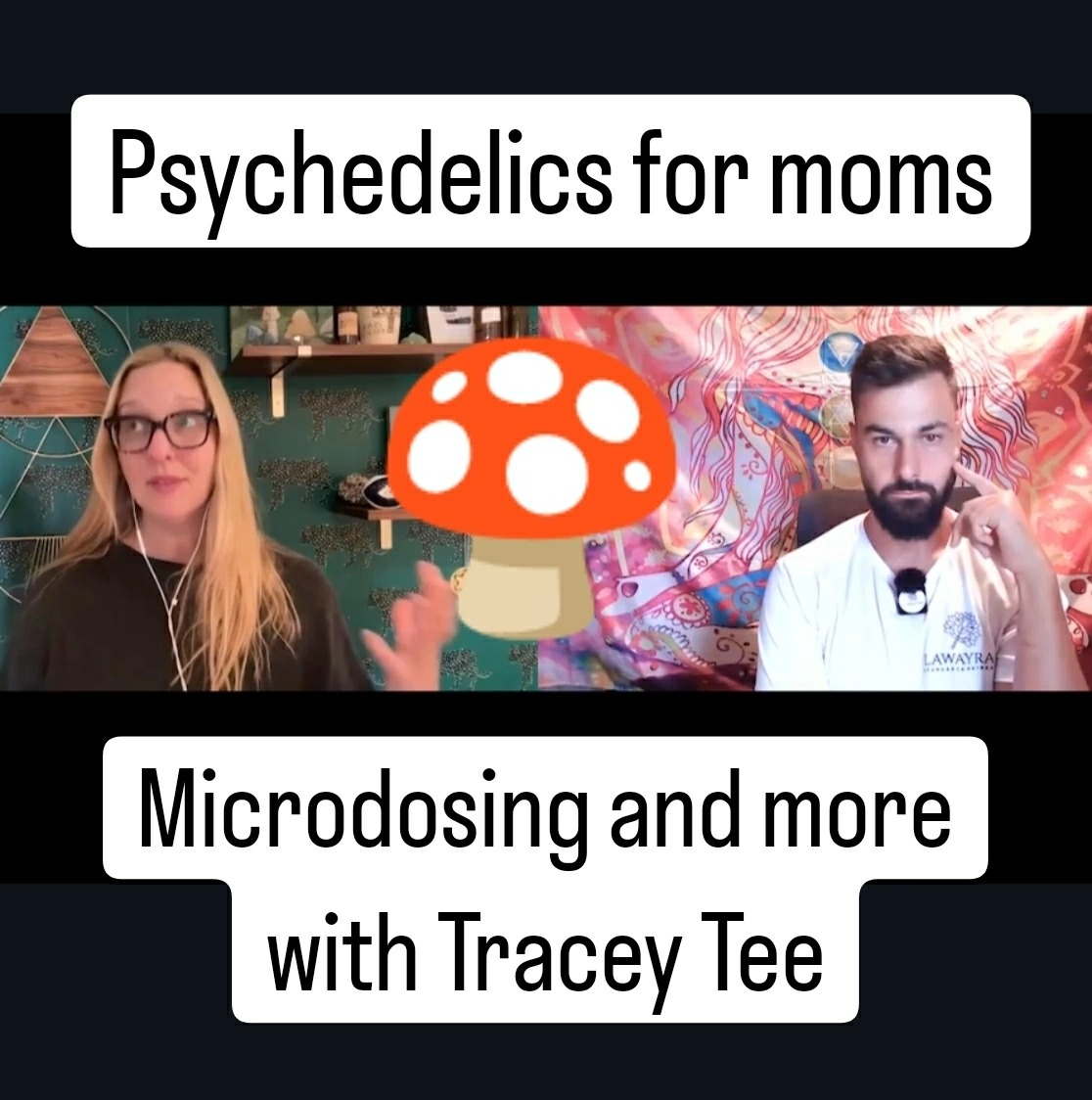
Parenthood can be simultaneously magical and exhausting. Many mothers experience joy wrapped in fatigue, love mixed with anxiety, and identity buried beneath endless responsibility. In a candid episode of the Ayahuasca Podcast, host Sam Believ talks with Tracey Tee, a mother and advocate for mindful microdosing, about how small, controlled doses of psychedelics — particularly psilocybin mushrooms — have helped her and other mothers navigate emotional stress, mental fog, and the heavy complexities of modern motherhood.
This isn’t about tripping, escapism, or counterculture rebellion. It’s about everyday resilience, emotional tuning, and finding space for presence in a life saturated with demands.
Motherhood: Rewarding Yet Overwhelming
Tracey begins by describing what many moms silently face: the joy of family life paired with chronic stress that never seems to let up. There are diapers, schedules, food, school runs, emotional labor, caretaking — and yet, somewhere inside, an ache for self remains. The identity of “mom” is beautiful, but without integration, it can overshadow all other parts of a person’s inner world.
She speaks openly about how overwhelming motherhood can be not just physically, but emotionally and cognitively. The relentless mental load — anticipating needs, calming emotion, managing behavior — can contribute to burnout, anxiety, sleep disturbance, and a sense of being “depleted.” Many mothers try therapy, exercise, meditation, or medication — but not everyone finds relief that fits their life context.
What Is Microdosing — And Why Moms Might Be Interested
Microdosing refers to taking very small, sub-perceptual amounts of psychedelics — doses that don’t produce overt hallucination or “trip” effects, but that may subtly shift mood, clarity, focus, and emotional regulation. Rather than an immersive ceremony, this is daily or semi-regular small dosing intended to support wellbeing.
Tracey emphasizes that microdosing isn’t about getting high or escaping; it’s about being more present — clear-headed, emotionally available, and grounded — without losing functionality or responsibility. For mothers, that’s a crucial distinction: microdosing happens alongside life, not instead of it.
Emotional Resilience and Regulation
One of the main themes Tracey highlights is how microdosing has helped some mothers manage stress and emotional overwhelm. Rather than reacting to tension with frustration or exhaustion, microdosers report increased capacity to notice rising stress before it erupts. This isn’t just cognitive; it’s somatic — noticing tension in the body, breathing into emotional discomfort rather than suppressing it.
For some, this translates into deeper patience with children, more space to reflect before responding, and greater emotional bandwidth to engage rather than react. Tracey observes that microdosing doesn’t remove challenges, but it can change how a person moves through them.
Mental Clarity and Creativity
Another area many mothers describe shifting is mental fog — that sense of scattered attention that parenting life often creates. Tracey explains that microdosing can reduce rumination and mental exhaustion, helping users stay more present and engaged in daily tasks without becoming overwhelmed by them.
This doesn’t mean every day becomes easy. But it often means mental flexibility — the ability to think more clearly, feel more grounded, and hold multiple emotional states without collapse.
Identity Beyond “Just Mom”
Motherhood is deeply rewarding, but it can also eclipse a person’s sense of self. Tracey talks about how microdosing helped reconnect her with layers of identity that weren’t just tied to caretaking: creativity, curiosity, emotional depth, connection with partner, joy in art or work — parts of self that can get lost in the daily grind.
Microdosing didn’t replace the challenges of motherhood, but it helped her access parts of herself that modern parenting often buries. It helped create breathing room inside, so she could show up more fully to all parts of her life — not just the role of “mom,” but the whole person.
Safety, Context & Responsibility
Importantly, Tracey approaches microdosing with intentionality and respect, not haphazard experimentation. For mothers, context matters: no one wants to be mentally impaired while caring for children. The goal is sub-perceptual doses — small enough to avoid cognitive disruption, but large enough to support emotional regulation and clarity.
She emphasizes preparation: understanding dose, timing, body sensitivity, and personal health. It’s not about daily use for everyone; many mothers find patterns that work for them — weekends only, light doses a few times a week, or dosing intentionally during stressful periods rather than habitually.
Tracey also stresses integration: microdosing alone doesn’t fix underlying patterns. It can be a support tool, but emotional awareness, therapy, community, movement, rest, and reflection are still vital pieces of the overall puzzle.
A Whole-Life Perspective
Microdosing for mothers, in Tracey’s view, isn’t a trend or a shortcut — it’s an added support for inner work. It’s about meeting life with more presence, resilience, and emotional fluidity, not bypassing responsibility or reality. For many mothers who participated in her community, the benefits are described not as dramatic trips, but as subtle shifts in how life feels from the inside.
One mother described it as a gentle lifting of fog: not a rush of visuals, but an enhanced alignment between what she thinks, feels, and does. Another spoke about increased capacity to deal with relational tension with compassion, not reaction.
Not for Everyone — But Worth Thoughtful Exploration
Tracey is clear that microdosing isn’t a universal solution. It’s not appropriate for everyone, especially without careful research, attention to individual health circumstances, and understanding of legal contexts. What works for one mom may not feel right for another. And she cautions against treating it as a “quick fix” — there is no magic bullet for the complexity of motherhood.
Instead, she invites mothers to see microdosing as a kind of tool in a toolbox, to be considered alongside rest, therapy, community support, and self-care.
A New Lens on Motherhood and Healing
At the heart of the conversation is a simple insight: motherhood doesn’t have to be a sacrifice of self. Challenges, exhaustion, identity shifts, emotional overload — these are real. But Tracey’s experience suggests there may be paths that help women navigate these challenges with more presence, resilience, and self-compassion.
Microdosing isn’t about escaping motherhood — it’s about meeting it fully, with awareness, curiosity, and support. In a culture that often asks mothers to give endlessly of themselves, Tracey’s reflections open space for an important question: what if healing isn’t just about coping, but about transforming how we live inside our days?
And that may be one of the most healing shifts of all.
Based on the Ayahuasca Podcast episode “Microdosing of psychedelics for moms” with Sam Believ and Tracey Tee.

Sam Believ is the founder and CEO of LaWayra Ayahuasca Retreat, the best-rated Ayahuasca retreat in South America, with over 520 five-star Google reviews and an overall rating of 5 stars. After his life was transformed by Ayahuasca, he dedicated himself to spreading awareness about this ancestral medicine to help address the mental health crisis. Sam is committed to making Ayahuasca retreats affordable, accessible, and authentic, with a focus on care, integration, and the involvement of indigenous shamans. He is also the host of the Ayahuasca Podcast.